

In With The New
Cuts through the week's noise.
In this week's newsletter: Archie Marks, acting editor of GAY45, cuts through the week's noise exclusively for subscribers, plus our essential recommendations.
Our subscribers sustain our award-winning journalism. Join them today.
Thermometer€15 is a forgettable expense for most of our readers. It's everything to this story.
We prepare a series of investigations on the expansion of Pride and the financial structure behing them.
For our reporting we nee funds for travel.
We need now 250 donors at €15. We have 191. Please help our journalism!
In With The New
By Archie Marks, acting editor
The UK received its sixth prime minister in ten years this week, in the form of Andy Burnham, the former Manchester mayor. His appointment came on the heels of his predecessor Keir Starmer’s resignation; Starmer, a former lawyer, had faced calls to step down after Labour’s historic losses in the UK’s council elections earlier this year. Many believed that the party needed a stronger leader who wouldn’t U-turn on policy (the two-child benefit cap, winter fuel payments) as frequently as Starmer seemed to.
Burnham’s appointment has been touted with similar ‘breath-of-fresh-air’ language that Starmer’s Labour once promised. Indeed, his first speech as prime minister on Monday pledged to end homelessness, a promise he notably made during his Manchester tenure (under Burnham, rough sleeping actually more than doubled in his last five years as mayor). It was a ham-fisted but pleasing clarion call for hope, particularly in the midst of Reform UK’s continuing popularity.
Yet Burnham is hardly the socialist paragon that many of Labour’s former supporters might have hoped for. He reportedly backed Home Secretary Shabana Mahmood’s efforts to limit legal and illegal immigration, has voiced his support for the EHRC regulations that effectively banned trans people from using single-sex facilities, and issued what some saw as an empty apology (just earlier this month) for his party’s enthusiastic support for Israel amidst the ongoing Gaza genocide, saying rather clumsily that Labour “didn’t get it right.”
Mexico will be seeing their own leadership change shortly, albeit under much more unfortunate circumstances: the mayor, Benjamín Medrano Quezada, was shot and killed on 7th July while out getting ice cream in the city of Guadalajara. Quezada was the first out gay mayor of Mexico, yet had a strange and staunch opposition to same-sex marriage & adoption, and LGBTQ+ pride parades. His assassination is currently under investigation.
The changing of parameters extended to the realm of football, too: in the World Cup, England won against France 6-4, a startling comeback off the back of their Argentinian defeat just three days prior. The final was a little less unpredictable, even dull, with the first and only goal being scored by Spain’s Ferran Torres in the 106th minute. Spain were widely predicted to be the winners, but that made their win against what some perceived as a bitter and jaded Argentina no less gratifying.
What was new about the final was not the football at all, but what was sandwiched in between the two halves of the game: for the first time in World Cup history, there was a halftime show. Modelled after the increasingly successful Super Bowl spectacles of late, the show was curated by Coldplay frontman Chris Martin and co-headlined by Madonna, Justin Bieber, BTS and Shakira. Martin had decorated the performance with his typically woolly wording: “This was always about bringing together the world’s top performers and creating a real moment of collaboration and unity,” paraphrased Guy Carrington, an executive producer of the show.
The performance did surprise: four of Western culture’s most beloved acts came together to make a show that was received tepidly. Purists decried the breach of the long-held fifteen-minute halftime rule (put in place in the interest of player performance and wellbeing). Outlets like Time criticised it as “overstuffed [and] studiously apolitical.” A great deal of the furore was over the perceived Americanisation of football, of which the show seemed to be a symptom: an emphasis on advertising and spectacle and viral moments, rather than on the game itself.
This weekend also saw the long-awaited release of Christopher Nolan’s adaptation of Homer’s The Odyssey. The film has been officially out for five days and has already outgrossed tentpoles like Supergirl, Moana, and Steven Spielberg’s Disclosure Day; it is expected to overtake The Mandalorian & Grogu in the next couple of days. That’s without mentioning the widespread acclaim it has accrued, with five-star ratings across the board, and more than a few deployments of the word ‘masterpiece’.
Though the film’s success was practically a given, due to Nolan’s track record at the box office and the film’s A-list-heavy cast, it’s nonetheless startling that a three-hour historical epic has been more popular this summer than Disney princesses, DC superheroes and Star Wars. It’s heartening, too, that The Odyssey’s naysayers have been proven wrong; a few terminally online pundits decried the casting of Black actress Lupita Nyong’o and trans actor Elliot Page, arguing this compromised the historical accuracy of a film that also features a witch, a nymph and a cyclops.
Putting aside the fact that these takes are rarely cast in good faith, Nolan’s Odyssey ought to be celebrated for its championing of Page in particular. Nolan worked with Page in 2010’s Inception before they came out, so to witness a filmmaker of his calibre so readily accept Page’s new name and pronouns – and cast him in a role so pivotal to the film’s plot – is undeniably moving, even precedent-setting.
The Odyssey joins films like Obsession and Backrooms in ushering in a new phase of cinema, one where Gen Z can truly feel themselves and their thoughts represented in onscreen narratives. Nolan’s Odyssey carries with it a firm anti-war message – one that would’ve been unthinkable twenty years ago. Such is the new era: the key to survival is not adapting or catering to what you think is the most presentable version of yourself, but insisting on being exactly who you are.
MUST READ OF GAY45
OPINION

From Europe & USA: On AI and the Witch Hunt
How AI detectors became the instruments of a witch hunt.
REPORTAGE

From the UK: Nothing More to Find: Ed Cornes Murder
A gay teenager died two days into his first term. The London Metropolitan Police decided what kind of death it was, and stopped looking.
BOOKS
From Italy: 85 Seconds to Midnight
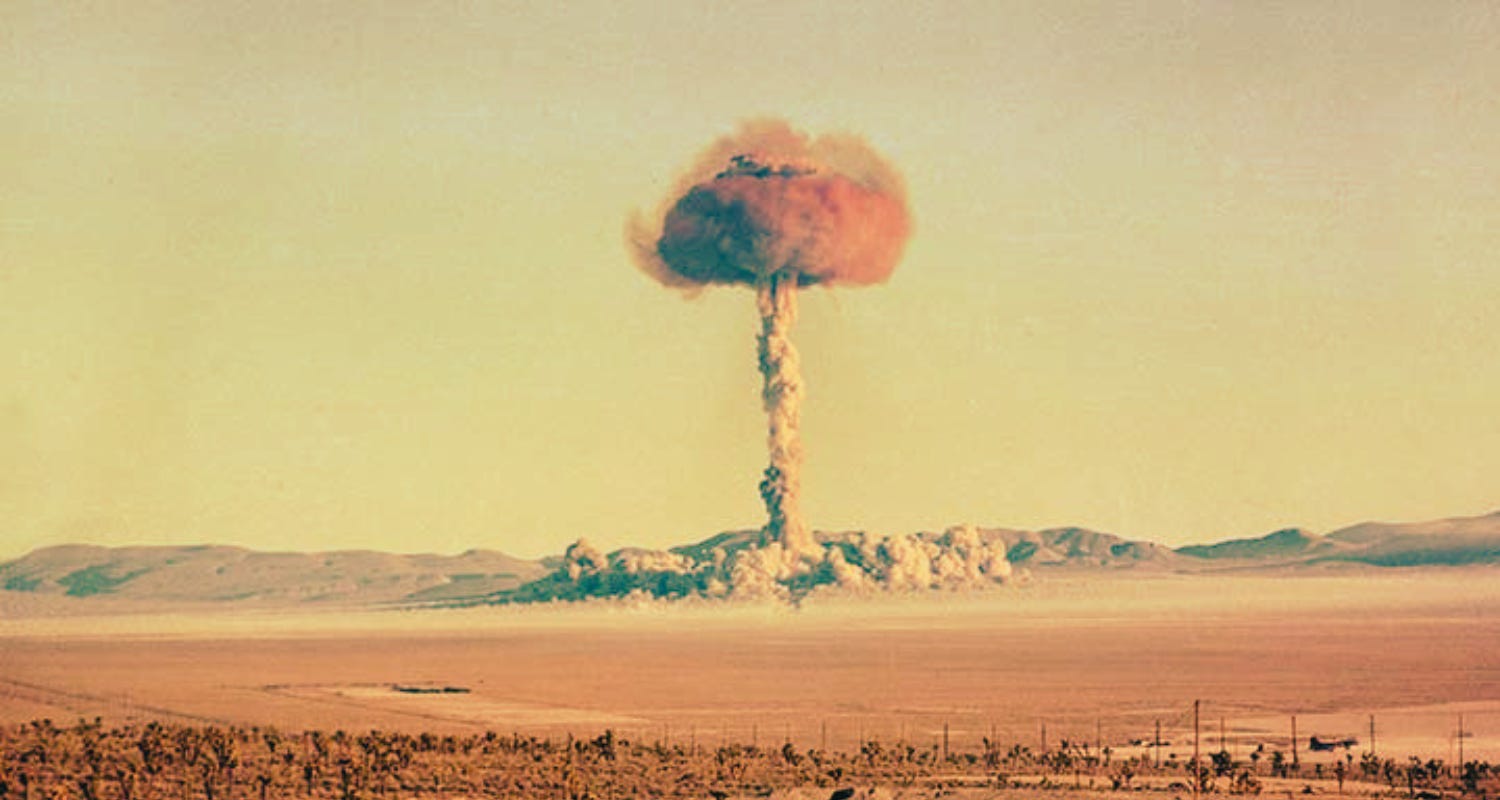
Famous physicist Carlo Rovelli’s case against rearmament is morally clear and politically naïve in just about equal measure. Read at eighty-five seconds to midnight, it’s still the argument queer readers can least afford to scroll past.
AND MORE ON GAY45.eu
Political and entertainment quality journalism from Europe and the World.
For in-depth commentary on the week’s essential stories, listen to our weekly podcast, Queer News & Journalism.Support independent queer journalism: subscribe to keep our reporting free for everyone, or make a donation.
For ads here, contact taylor@gay45.eu