

It Does Not Feel Like Pride
Cuts through the week's noise.
In this week's newsletter: Jude Jones, editor-in-chief of GAY45, cuts through the week's noise exclusively for subscribers, plus our essential recommendations.
Our subscribers sustain our award-winning journalism. Join them today.
Thermometer€15 is a forgettable expense for most of our readers. It's everything to this story.
We prepare a series of investigations on the expansion of Pride and the financial structure behing them.
For our reporting we nee funds for travel.
We need now 250 donors at €15. We have 7. Please help our journalism!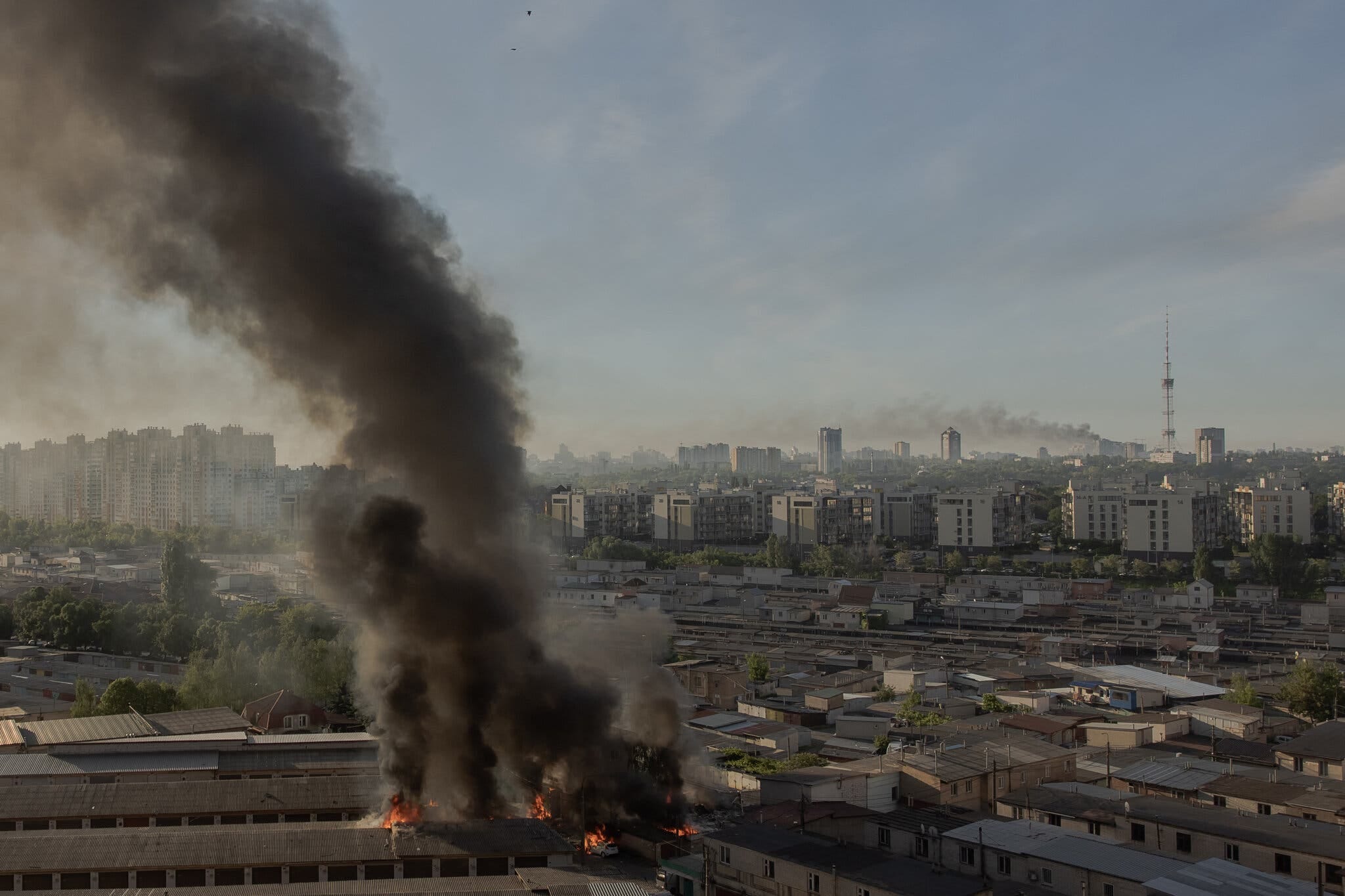
Operational Incidents
By Jude Jones, editor-in-chief
Russia has spent the last week demonstrating, again, that Ukrainian borders are no geographic limit. On 29 May 2026, a Russian-made Geran-2 drone crossed into Romania’s Galați region, struck a residential apartment block, and injured two civilians (a woman and a child) before catching fire and burning out. Romanian authorities scrambled F-16s and a helicopter, but the drone had already hit its target by the time interception protocols were cleared. NATO Secretary General Mark Rutte responded by reaffirming readiness to defend “every inch” of allied territory -- an assurance now repeated so often it has been reduced to procedure. Romania has now recorded at least 25–28 drone airspace violations since 2022, with 15 in 2026 alone, according to allied assessments. Meanwhile, European armament continues.
The incident is being treated in Bucharest as an inevitability: drones overshooting Ukrainian targets and drifting -- or being pushed by electronic warfare -- into NATO airspace with increasing frequency. Romania has already requested additional low-altitude radar systems and anti-drone interceptors, while simultaneously admitting that existing rules of engagement still hesitate at the exact moment hesitation becomes dangerous.
Further north, NATO’s eastern flank continues to behave like a pressure sensor being steadily over-tightened. Lithuania, Latvia, and Estonia have logged repeated drone and radar incidents this year, most of them tied to the wider pattern of Ukrainian strikes on Russian oil infrastructure across the Baltic. The numbers are unglamorous but persistent: multiple drone crashes across March–May 2026, including at least one strike on Estonia’s Auvere power station chimney (25 March) and another incident in Latvia where a drone hit an oil storage facility in Rēzekne on 7 May, damaging storage tanks but causing no casualties. NATO air policing aircraft -- including French jets deployed under Baltic Air Policing rotations -- have been scrambled repeatedly in response.
A more uncomfortable detail sits underneath the official language: many of these “incursions” are not deliberate attacks but spillover effects of a drone war that has effectively normalised long-range autonomous munitions over continental Europe. Estonia’s most dramatic case this year came on 19 May 2026, when a NATO-operated Romanian F-16 shot down a Ukrainian drone over Estonian airspace after it veered off course. Ukraine later apologised. NATO called it an “operational incident.” Estonia called it a reminder that the sky is now shared by actors who are not always in control of what they launch.
The Baltic region has effectively become a live-fire feedback loop: Ukraine targets Russian oil terminals; Russia jams or reroutes air defence signals; drones go off course; NATO scrambles jets; governments issue statements; and the system resets.
In Vilnius and Brussels, officials continue to describe this as “hybrid pressure” from Moscow, though the term increasingly functions as diplomatic insulation for a more basic reality: Europe is now inside the perimeter of the war, whether it admits it or not. NATO’s Operation Eastern Sentry (launched September 2025) remains active, with rotating deployments of F-16s, F-35s, Rafales, and Eurofighters across the eastern flank, designed less to deter escalation than to manage its frequency.
Elsewhere, Gaza continues under a similarly quantified logic of control. Israeli officials have stated operational dominance over roughly 60–70% of the Strip, depending on the phase of the latest offensive cycle, with evacuation zones shifting repeatedly across Gaza’s 365 square kilometres. Humanitarian agencies continue to report restricted access to fuel, water, and medical corridors, while ceasefire talks mediated through Qatar, Egypt and the United States remain stalled in what has become a familiar pattern: negotiation as background noise rather than interruption.

MUST READ OF GAY45
OPINION

From the World: Pride Should Ditch the Corporations to Become a Movement Again
Pride was once a movement of the left. We surrendered our liberation struggle to the very corporations that once denied us health care and still does. Liberation could never have come through reform alone—it demanded revolution and political progress.
FILM & TV

From France: Queer Palm Winners
This year was a record of queer films at the Cannes Film Festival. Teenage Sex and Death at Camp Miasma won the Queer Palm 2026.
BOOKS

From Ireland: Colm Toibin: The News from Dublin
The new book News from Dublin by Colm Toibin is brilliant literature. Nothing about him is decorative. He makes the small incision and shows you what he found.
AND MORE ON GAY45.eu
Political and entertainment quality journalism from Europe and the world.
For in-depth commentary on the week’s essential stories, listen to our weekly podcast, Queer News & Journalism.Support independent queer journalism: subscribe to keep our reporting free for everyone, or make a donation.
For ads here, contact taylor@gay45.eu